Diabetes Technology in the Hospital: Where We Stand
Jul 24, 2026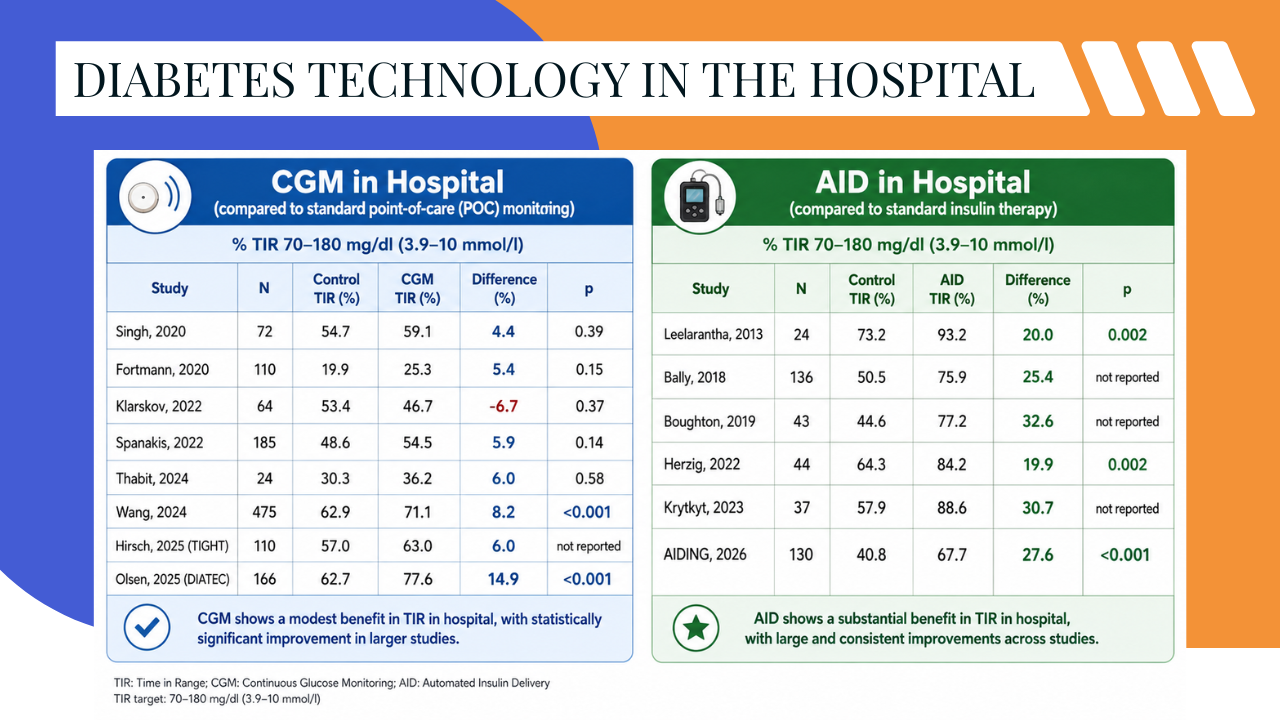
What are we aiming for? What do CGM and AID actually deliver? And how do you put them into practice?
A state-of-the-art overview after ADA 2026.
I have written this for two groups at once.
- The clinicians and educators who build inpatient protocols.
- And the people with diabetes who will be admitted under them.
Usually these two conversations happen in separate rooms. They should not. The evidence is the same for both. What differs is what you can do with it.
One idea runs through everything below:
Removing a working system is not a neutral act. It is an intervention.
Hospitalisation is one of the hardest places to manage glucose. Acute illness, surgery, infection, steroids, changing intake, less movement, shifting insulin needs — all of it pushes glucose around, toward both highs and lows.
And this is not a small group. Around 38–40% of hospitalised patients have hyperglycaemia or diabetes, rising to 70–80% of those admitted with critical illness or for cardiac surgery.1
There are two routes to a high glucose on the ward:
- Pre-existing diabetes — patients who arrive already living with it.
- Stress hyperglycaemia — any glucose >140 mg/dL (7.8 mmol/L) with no prior history of diabetes. It usually settles as the illness resolves. But up to 60% of these patients are diagnosed with diabetes within 6–12 months. The admission is a screening opportunity.1
Meanwhile, more and more patients arrive already wearing a sensor or running a closed loop at home.
So the question is no longer whether diabetes technology belongs in hospital.
It is what it does, and how to use it well.
1. What Are We Aiming For?
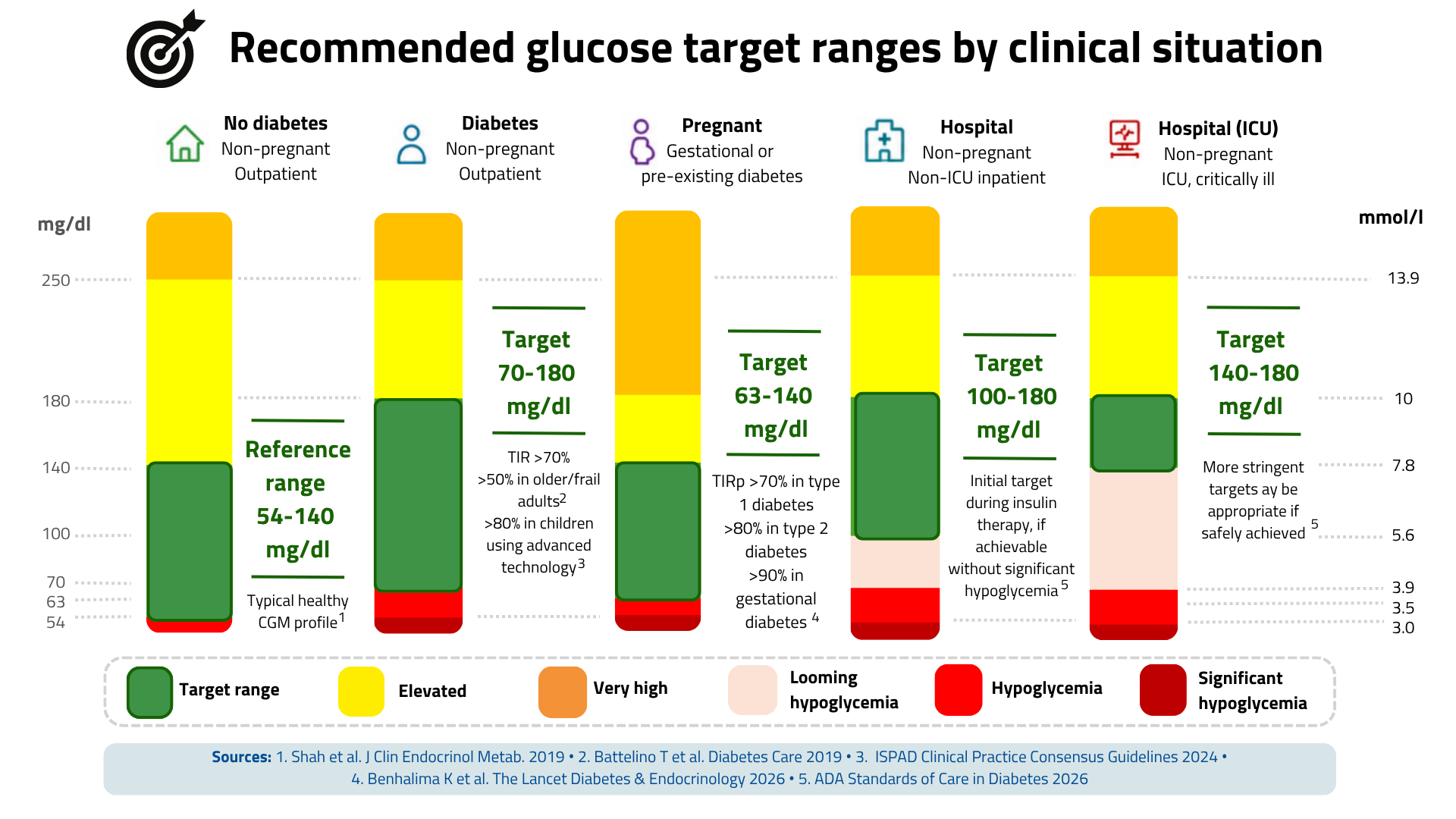
The ADA targets are deliberately pragmatic:2
- Non-ICU: 100–180 mg/dL (5.6–10.0 mmol/L)
- ICU on insulin: 140–180 mg/dL (7.8–10.0 mmol/L)
…provided those targets can be reached without significant hypoglycaemia.
That last clause is the whole story. Every attempt to chase tighter control with intensive insulin drove hypoglycaemia up.1 And hypoglycaemia tracks with worse outcomes.
So the targets sit higher than we would accept outside the hospital. This is on purpose.
There is also a growing argument that one target does not fit everyone.
Much of the evidence linking inpatient hyperglycaemia to increased morbidity and mortality comes from patients with stress hyperglycaemia or without previously diagnosed diabetes, whereas the association is considerably weaker in those with established diabetes.3–6
Patients with chronically elevated glucose appear to adapt to higher glycaemic levels, meaning that a rapid reduction in glucose—even into the conventional target range—may represent relative hypoglycaemia. This physiological stress response, often referred to as the hyperglycaemia paradox, may contribute to adverse outcomes despite glucose remaining above the biochemical hypoglycaemia threshold.1
One consequence deserves to be stated plainly:
- someone who has spent years building a time in range they are proud of will watch it fall apart over a week on a ward.
- And will usually be told nothing about why.
The fall is largely intentional. Chasing 70–140 mg/dL (3.9–7.8 mmol/L) through an acute illness, with a regimen adjusted by people who do not know that patient, has repeatedly produced more hypoglycaemia and worse outcomes.
In interviews with hospitalised adults, people described being tested but not told the result. And being aware their glucose was drifting while feeling powerless to act.23,24
The anxiety is not irrational. It is what happens when a number someone has been trained to treat is left unexplained.
Saying the target out loud, could be helpful.
2. How We Treat Today
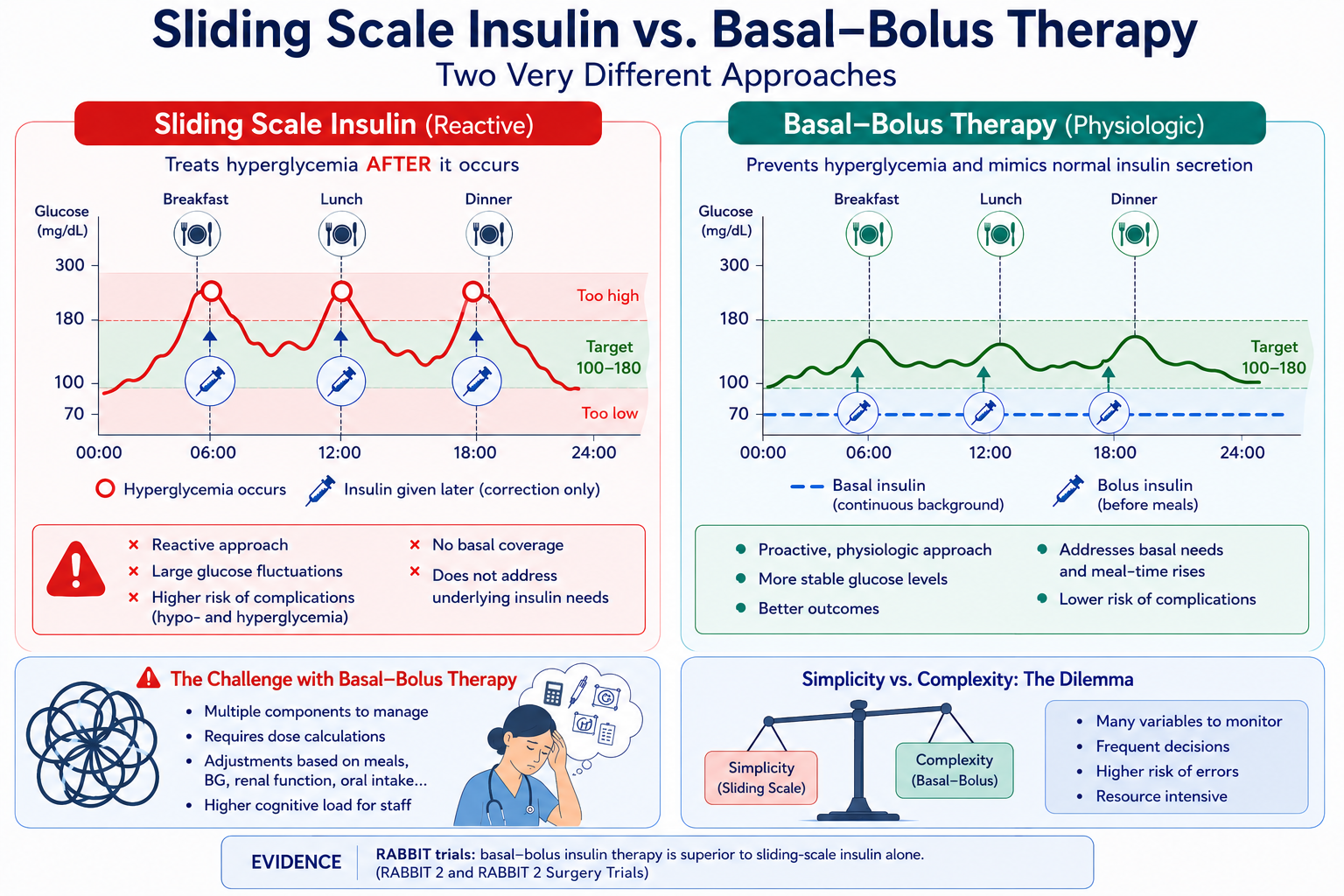
Glucose should be actively managed in any hospitalised patient.
Insulin is generally started once glucose passes 180 mg/dL (10 mmol/L) — IV in the ICU, subcutaneous on the wards.2
The RABBIT trials settled the central question: physiologic basal–bolus insulin is superior to sliding-scale alone, with better glycaemic outcomes and fewer complications.7,8
But basal–bolus is demanding. It needs frequent monitoring, continuous dose adjustment and experienced staff.
Even specialist centres struggle to reach target.
And there is still no agreed protocol for patients on IV glucose, TPN or enteral feeding.2,9,10
Much of this burden falls on junior staff with little specialist training. It is not surprising that errors occur. The system asks a great deal of the people least equipped for it.
There is a second version of that sentence, which we hear less often.
The same system routinely takes insulin away from people who have been dosing it themselves for decades.
In interviews with older adults admitted for surgery, participants described their insulin being locked away on admission. Doses arriving late, or after meals. Waiting for a doctor to authorise a correction they would have given themselves in seconds.23
One participant with forty years of type 1 diabetes described losing control of his own insulin as "like having your arms chopped off."23
Across a larger multi-centre study the themes recurred: no control over glucose management, no involvement in care planning, meals arriving out of step with insulin.24
This matters clinically, not only experientially. Being able to self-administer insulin in hospital is independently associated with greater inpatient treatment satisfaction.28
And staff themselves describe the current arrangement as offering less safety than it appears to.25
The person in the bed is often the most experienced insulin user in the room.
But satisfaction is not safety, and home experience does not transfer cleanly to the ward. Steroids, NPO orders, changing renal function and different targets all shift the calculation. Covert self-dosing in pursuit of tight control has ended in severe hypoglycaemia.30 And there is no validated way to assess self-management during acute illness.
So ask about that experience. Use it. But do not assume it transfers.
This is precisely the gap technology should fill.
3. What Does CGM Deliver?
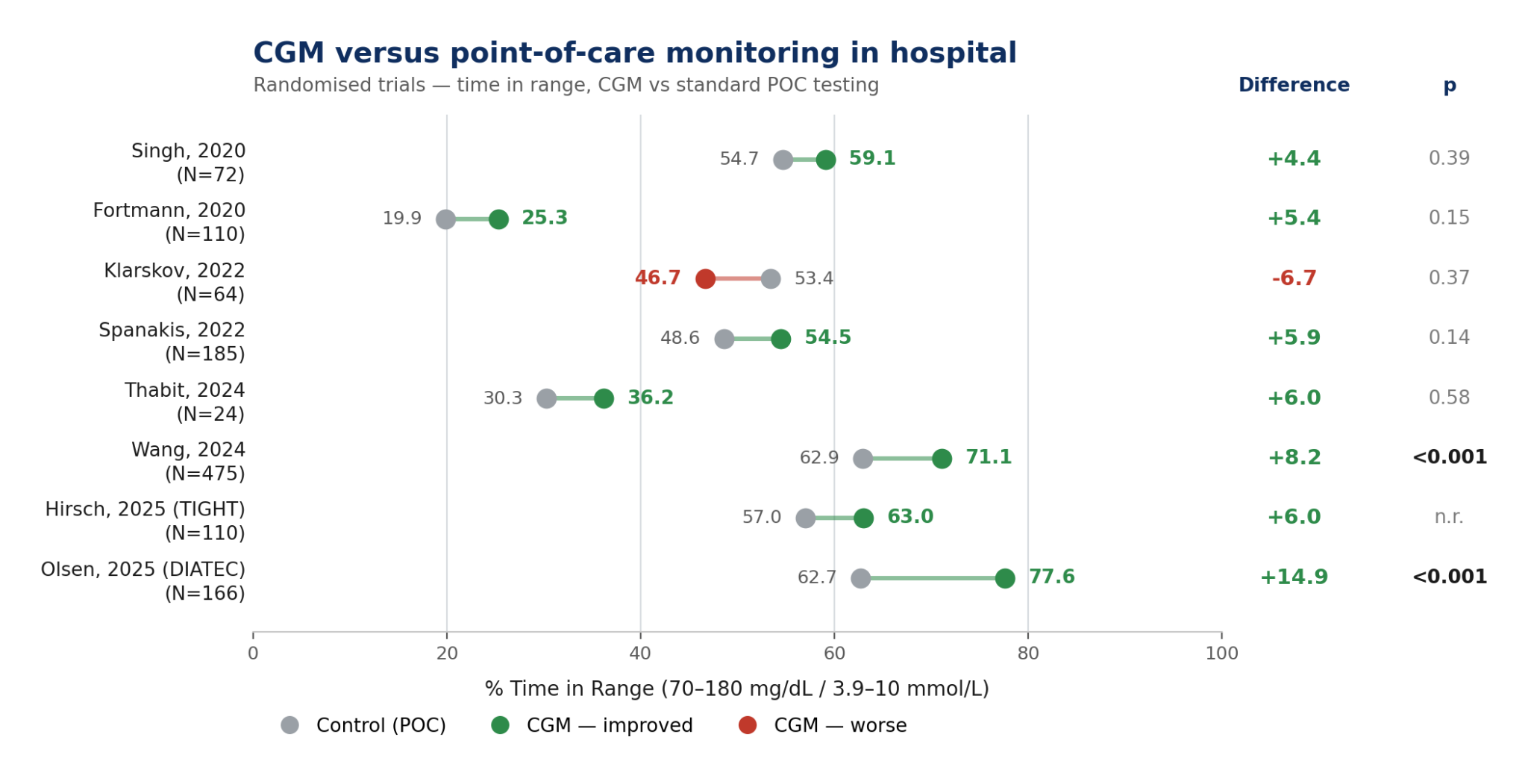
Compared with intermittent fingersticks, CGM offers real-time values, trend data, detection of nocturnal hypoglycaemia and postprandial peaks, and less nursing workload.
The glycaemic effect, however, is modest.
A meta-analysis of six randomised trials in 979 hospitalised patients showed only small improvements in time in range — on average around +7% TIR, with considerable heterogeneity.11
The spread is instructive. DIATEC achieved roughly +15%, the largest gain of any trial. But only because CGM was combined with structured insulin titration algorithms and specialist diabetes support.12 Other trials, including TIGHT13 and Thabit's pilot under non-specialist teams,14 showed limited benefit.
CGM provides information. Someone still has to act on it. The benefit lives in the protocol, not the sensor.
4. How to Implement CGM
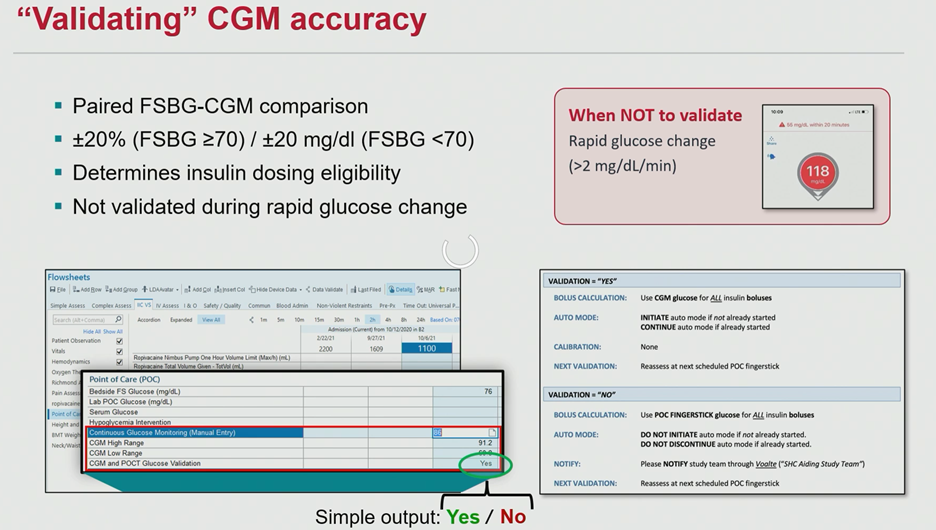
[FIGURE: CGM validation within EHR during AIDING Trial - Presented at ADA2026 by dr Davis]
No CGM is formally approved for inpatient use. Yet professional recommendations now support continuing CGM in patients already using it at home — provided an institutional protocol exists.2
Accuracy (MARD) is somewhat lower in hospital, and several common medications affect readings. The protocol is what turns a home device into a safe clinical tool.
Most inpatient protocols share the same six building blocks:15
- Assessment. Is the patient conscious, able to engage, and not on IV insulin? (Some centres now permit CGM even during IV insulin.29)
- Validation against POC. A paired fingerstick once or twice daily, ~20% agreement threshold. Beyond that, revert to POC. Low and high cut-offs (e.g. 80 and 250 mg/dL - - 4.5 and 13.9 mmol/L) trigger a confirmatory fingerstick.
- Documentation. A defined place in the EHR — nursing flowsheets, structured templates or SmartPhrases.
- Defined responsibilities. Who documents, who decides on continuation, who assesses at weekends. Endocrinology-led, pharmacist-led or nurse-led all work. Clarity matters more than the model.
- Remote monitoring (optional). Dexcom Follow supports up to 25 patients, LibreLinkUp up to 20 — with consent, since everyone at the station can see real-time glucose.
- Special situations. Imaging, surgery, delivery, and a discharge handover plan.
Richer protocols tend to produce better control.
Simpler ones cost less nursing time, less patient burden and less money.
The right balance is local — and choosing it deliberately is itself a sign of a mature programme.
Step 2 generates the most friction at the bedside. It is better explained than defended.
Someone who wears a sensor usually trusts it more than a hospital meter, and in daily life is usually right to. In hospital, two things change: accuracy is lower in acutely ill patients, and several inpatient medications interfere.
The paired fingerstick is not a comment on the device, or on the person wearing it. It is the mechanism that permits insulin to be dosed from that sensor at all. It is the price of keeping it, not evidence of distrust.
People who retained their wearable technology during admission described it as one of the few things that let them stay on top of their own care — though some staff were unfamiliar with how it worked.23 Both of those are fixed by the same protocol.
5. What Does AID Deliver?
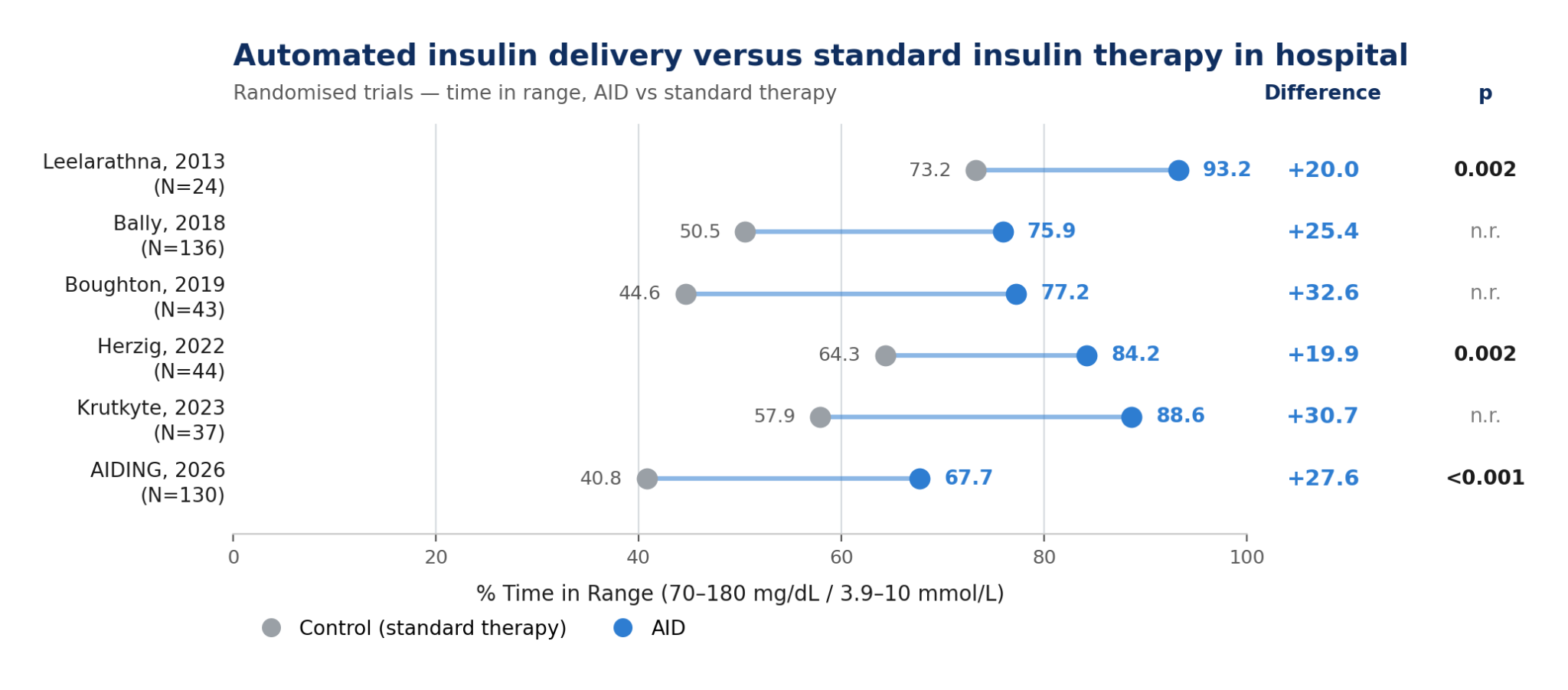
Automated insulin delivery adds the missing component. Instead of only displaying glucose, AID acts. The effect is of a different order.
A systematic review and meta-analysis of randomised inpatient trials found a +24.6 percentage point improvement in TIR — with reduced hyperglycaemia, lower variability, lower mean glucose, and no increase in hypoglycaemia.16
Benefits held across diverse populations. The strongest effects were in patients with highly variable insulin requirements, including pancreatic surgery17 and haemodialysis.18
The AIDING trial
The clearest inpatient evidence comes from AIDING, presented as an abstract at the 2026 ADA Scientific Sessions.19
Unlike most earlier work, which focused on type 2 diabetes, AIDING enrolled both type 1 and type 2 patients across three US academic health systems.
Participants were randomised to Omnipod 5 with Dexcom G7 versus multiple daily injections plus CGM.
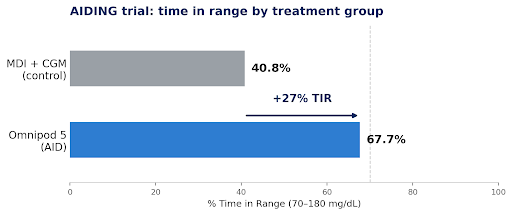
- Omnipod 5: TIR 67.7%, time <54 mg/dL (3.0 mmol/L) 0.17%
- MDI + CGM: TIR 40.8%, time <54 mg/dL (3.0 mmol/L) 2.3%
A +27% TIR gain, without increasing clinically significant hypoglycaemia.
Notably, the benefit was visible from day one — before the optimisation that usually accumulates over several pod changes.
AIDING also showed that AID can be systematically initiated in insulin-treated patients admitted for something else entirely.
AIDING did not simply test a device. It tested an entire care model.
6. How to Implement AID
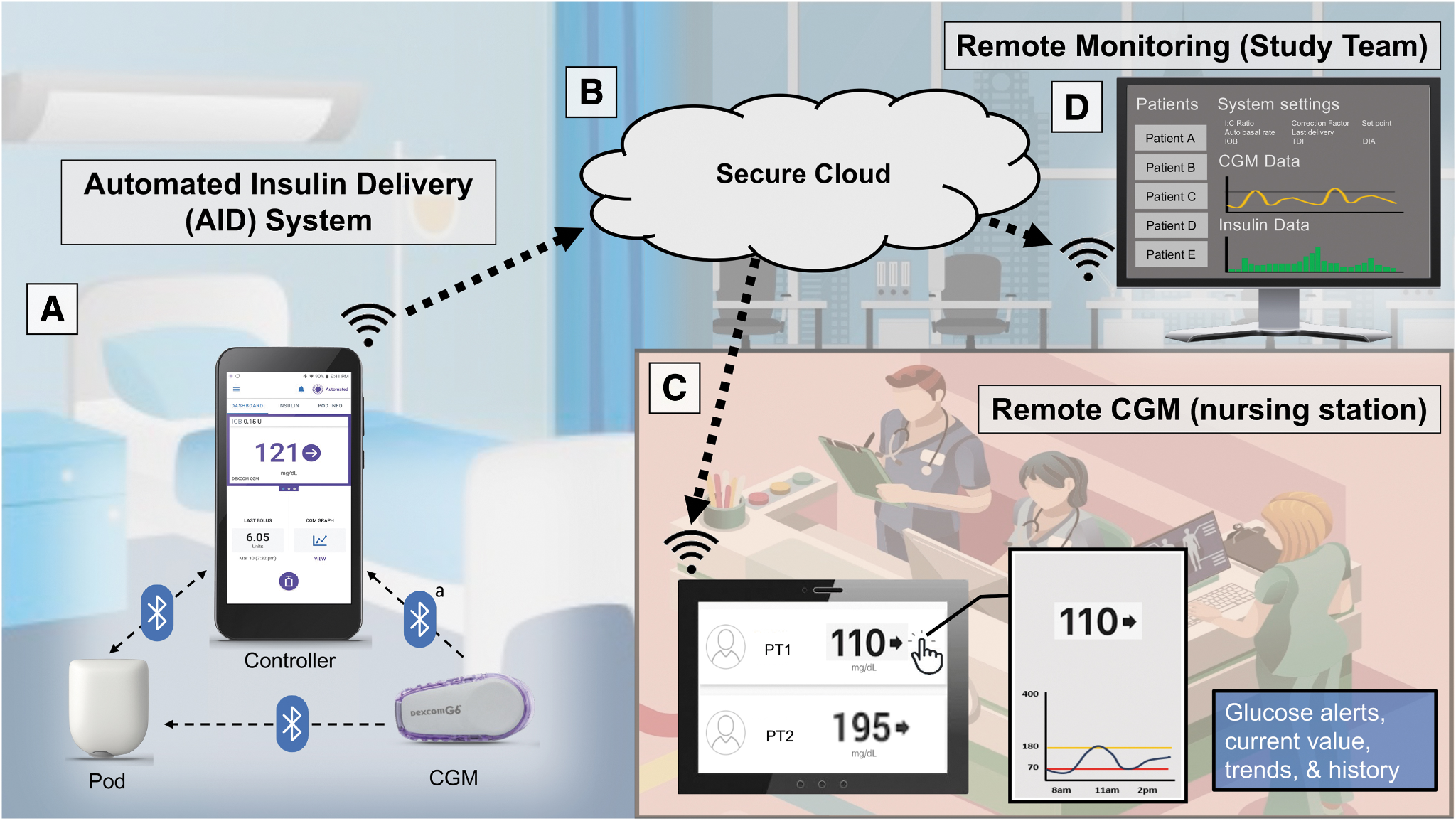
[FIGURE: Automated insulin delivery system set up in the hospital for the AIDING study.20]
Two situations must be separated. They demand very different things from a hospital.
- Continuing AID in a patient who already uses it — the everyday scenario.
- Systematically initiating AID in patients who were not using it — what AIDING did.
Almost everything AIDING required belongs to the second. For the first, the additional work is modest.
#1 Continuing AID in a patient who already uses it
If a CGM protocol exists, most of the groundwork is done. What is needed on top:
- An assessment of who can keep wearing their pump. Can the patient still manage the device, and do they have their own supplies? Essentially the same judgement already made for CGM.
- A CGM protocol, as above.
- A place in the EHR to record the pump — device and insulin type, settings, and every bolus delivered.
- Carbohydrate counts for hospital meals. Optional, but they make accurate bolusing far easier.
- A specialist diabetes team available for support. This one is not optional. When a device problem arises, someone has to be reachable.
Stripped down: an assessment, a place to document the pump, and a team to call.
The first of those is one line in a protocol and the most consequential thing that happens on the day of admission.
It also helps to see it not as one question but as four. Who is managing this device? With what supplies? Documented where? And who is called at 2am? Answer those and the device is rarely the problem.
There will be admissions where the answer is genuinely no — the patient is too unwell, or cannot engage. In my experience people accept that readily when it is explained.
Institutions draw this line differently, too. Some allow supervised self-administration; others keep all dosing with staff, for safety and legal reasons, and involve the patient through discussion instead. Both are defensible — if explained.
If you use a pump or sensor yourself, three things follow.
- Bring your own supplies. Pods or infusion sets, sensors, a charger, your usual needles, and your pump settings written down somewhere that is not only on your phone. Hospitals almost never stock these.
- Ask on day one what your hospital's policy is. Insulin dosing itself may stay with staff — but devices can often stay on under a protocol, sometimes with a signed waiver. In one study, people were frustrated to learn only afterwards what had been possible.²³
- Ask who the diabetes team is, and how they are reached at weekends.
#2 Systematically initiating AID — what AIDING required
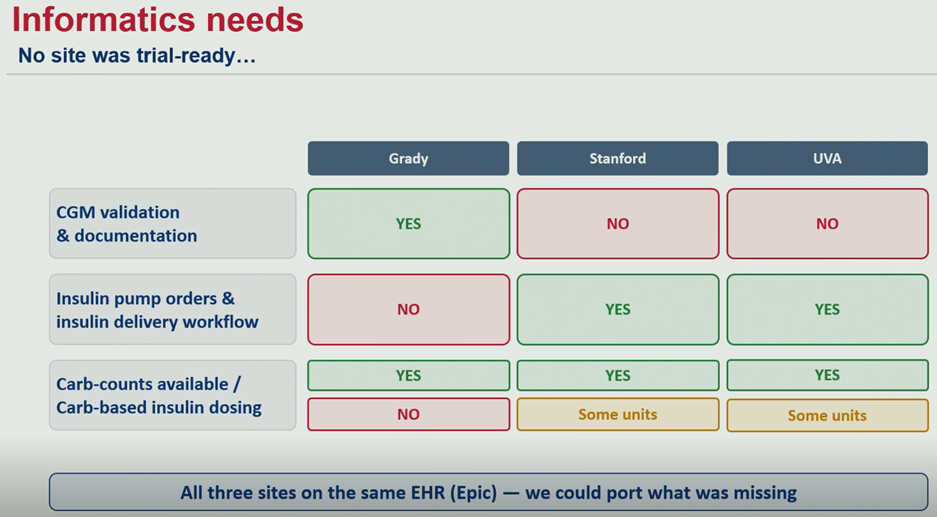
[FIGURE: Informatics needs: no site was trial-ready - Presented at ADA2026 by dr Hughes]
A major finding was that none of the participating centres were initially "AID-ready".
All required modifications to their EHR systems before the trial could run.19,21
Five components did the heavy lifting:
- Clearly defined responsibilities. Responsibility shifts from patient to team. Nurses validated CGM accuracy, delivered boluses, responded to alarms and documented insulin. Dietitians supplied carbohydrate counts. Diabetes specialists supervised insulin. Primary teams managed the underlying illness.
- Structured CGM validation. Only validated sensor values could drive dosing. Requirements relaxed as confidence grew — from six to two checks per day — with alerts at (4.4 mmol/L) and >300 mg/dL (13.9 mmol/L) for over an hour.
- EHR integration. Validation workflows, pump order sets, documentation pathways and refill workflows — folded into existing nursing workflows rather than run in parallel.
- Remote monitoring. A ward-level platform for nurses, plus one for the diabetes team. This remains the hardest piece to reproduce outside a trial: current data platforms can lag by 30 minutes to several hours.20
- Education and 24/7 support. Just-in-time training at the point of need,22 alongside a reachable diabetes team. Diabetes champion programmes help sustain this as staff rotate.15
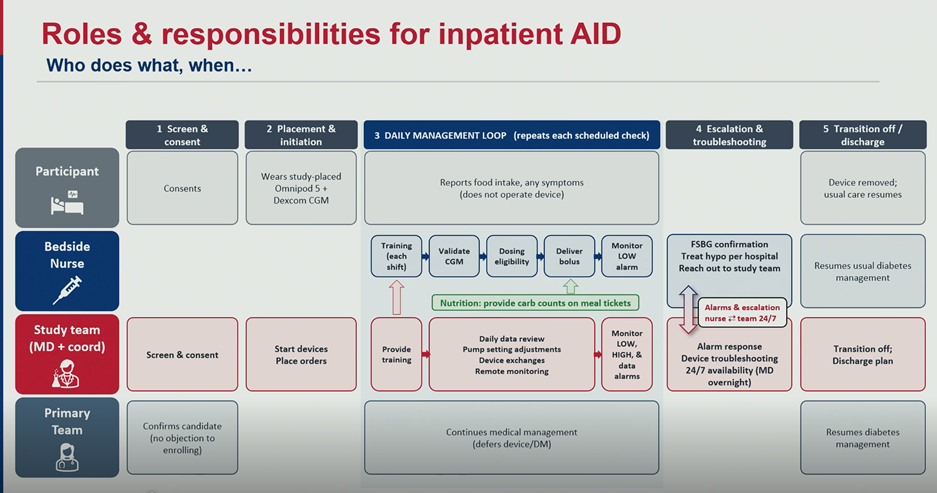
[FIGURE — Roles & responsibilities. Presented at ADA2026 by dr Hughes]
One observation from the pregnancy closed-loop work generalises well beyond pregnancy. Clinicians concluded that the best results came from a three-way collaboration between the team, the person with diabetes, and the algorithm — and that the technology was not a panacea on its own.27
That is as good a description of an inpatient AID programme as any protocol document has managed.
Why Not Everyone Yet: The Case for Restraint on Starting
Three numbers have appeared so far, and they are easy to run together: roughly +7 points of time in range from CGM, +24.6 from AID across pooled trials, and +27 in AIDING specifically. Looking at the last two, it is tempting to put every hyperglycaemic inpatient on CGM and everyone on insulin on AID.
Several things argue for restraint.
- The benefit of strict inpatient glucose control is not firmly established. Much of the evidence linking glucose to outcomes is correlational, and the mortality signal is strongest for spontaneous hyper- and hypoglycaemia rather than for the values we manage in known diabetes. Both may partly be markers of how sick a patient is.3–6
- The CGM benefit is small, and access is limited. Around +7% TIR is real but modest, and CGM remains off-label in hospital and generally unreimbursed for inpatient use.11
- AID carries a genuine operational burden — and the discharge question is unresolved. If a patient starts AID in hospital but cannot access it at home, they may need to be transitioned back to injections before leaving, which could lengthen the stay.
That last point has not been studied. It follows logically, and it deserves an answer. It is, in my view, the most important open question in the field right now.
None of this argues against the technology. It argues against rolling it out faster than the evidence, the reimbursement and the discharge pathway can support.
And note what these cautions have in common. Every one of them concerns starting technology in people who were not using it. None of them touches the case for continuing what a patient already runs.
Because that case never rested on time in range in the first place.
Conclusion
For all the heterogeneity between trials, the evidence points in one direction: diabetes technology can improve inpatient glucose management—modestly with CGM, and substantially with AID.
But perhaps the most important implication is simpler. Hospitals should first support the patients who already arrive using this technology.
Removing a working system is an intervention in itself. It takes away the expertise patients have built up through years of daily self-management and shifts insulin dosing to busy healthcare professionals working with an unfamiliar regimen. Delayed insulin administration, postponed correction doses, and communication gaps can all follow.23–25 In contrast, involving patients in dosing decisions—even when every injection is ultimately given by staff—is associated with greater satisfaction and fewer insulin timing errors.28
Importantly, none of these arguments depends on large improvements in Time in Range. Even if the clinical benefits of CGM prove more modest than we hope, preserving safe, familiar diabetes management remains good clinical practice.
The practical first step is therefore straightforward: allow patients to continue using the devices they already rely on whenever it is safe to do so, supported by clear protocols for patient assessment, POC validation, documentation in the electronic health record, and timely access to a diabetes specialist team. These measures are inexpensive, already recommended by several professional organisations, and give hospitals the experience needed before expanding technology use more broadly.
Then do the part that costs nothing: communicate. Explain the glucose targets and why they may differ from those at home. Explain that occasional POC validation is what allows CGM to remain part of inpatient care. Explain how insulin decisions will be made and what role the patient will play. Qualitative studies consistently show that what patients remember most is not the protocol itself, but whether anyone took the time to involve them.23,24
As CGM becomes more affordable, AID systems become easier to implement, and outpatient use continues to expand, the case for broader inpatient adoption will only become stronger.
The question is no longer whether diabetes technology belongs in hospital. Increasingly, it already does.
The challenge now is to build hospital systems that are ready for it.
Kind regards,

References
- Dhatariya K, Umpierrez GE. Management of diabetes and hyperglycemia in hospitalized patients. In: Feingold KR, Anawalt B, Blackman MR, et al., editors. Endotext [Internet]. South Dartmouth (MA): MDText.com, Inc.; 2000– [updated 2024 Oct 18; cited 2026 Jul 23].
- American Diabetes Association Professional Practice Committee. 16. Diabetes care in the hospital: Standards of Care in Diabetes—2026. Diabetes Care. 2026;49(Suppl 1):S315-S334. doi:10.2337/dc26-S016.
- Falciglia M, Freyberg RW, Almenoff PL, D'Alessio DA, Render ML. Hyperglycemia-related mortality in critically ill patients varies with admission diagnosis. Crit Care Med. 2009;37(12):3001-3009. doi:10.1097/CCM.0b013e3181b083f7.
- Krinsley JS, Rule P, Brownlee M, Roberts G, Preiser JC, Chaudry S, et al. Acute and chronic glucose control in critically ill patients with diabetes: the impact of prior insulin treatment. J Diabetes Sci Technol. 2022;16(6):1483-1495. doi:10.1177/19322968211032277.
- Poole AP, Finnis ME, Anstey J, Bellomo R, Bihari S, Biradar V, et al. The effect of a liberal approach to glucose control in critically ill patients with type 2 diabetes: a multicenter, parallel-group, open-label randomized clinical trial. Am J Respir Crit Care Med. 2022;206(7):874-882. doi:10.1164/rccm.202202-0329OC.
- Hermanides J, Egi M. The optimal glycemic control in patients with diabetes in the ICU: where is the sweet spot? Am J Respir Crit Care Med. 2022;206(7):811-812. doi:10.1164/rccm.202206-1045ED.
- Umpierrez GE, Smiley D, Zisman A, Prieto LM, Palacio A, Ceron M, et al. Randomized study of basal-bolus insulin therapy in the inpatient management of patients with type 2 diabetes (RABBIT 2 trial). Diabetes Care. 2007;30(9):2181-6. doi:10.2337/dc07-0295.
- Umpierrez GE, Smiley D, Jacobs S, Peng L, Temponi A, Mulligan P, et al. Randomized study of basal-bolus insulin therapy in the inpatient management of patients with type 2 diabetes undergoing general surgery (RABBIT 2 surgery). Diabetes Care. 2011;34(2):256-61. doi:10.2337/dc10-1407.
- Swanson CM, Potter DJ, Kongable GL, Cook CB. Update on inpatient glycemic control in hospitals in the United States. Endocr Pract. 2011;17(6):853-861. doi:10.4158/EP11042.OR.
- Desgrouas M, Demiselle J, Stiel L, Brunot V, Marnai R, Sarfati S, et al. Insulin therapy and blood glucose management in critically ill patients: a 1-day cross-sectional observational study in 69 French intensive care units. Ann Intensive Care. 2023;13(1):53. doi:10.1186/s13613-023-01142-9.
- Lima Chagas GC, Teixeira L, Clemente MRC, Lima Chagas RC, Santinelli Pestana DV, Silva Sombra LR, et al. Use of continuous glucose monitoring and point-of-care glucose testing in hospitalized patients with diabetes mellitus in non-intensive care unit settings: a systematic review and meta-analysis of randomized controlled trials. Diabetes Res Clin Pract. 2025;220:111986. doi:10.1016/j.diabres.2024.111986.
- Olsen MT, Klarskov CK, Jensen SH, Rasmussen LM, Lindegaard B, Andersen JA, et al. In-hospital diabetes management by a diabetes team and insulin titration algorithms based on continuous glucose monitoring or point-of-care glucose testing in patients with type 2 diabetes (DIATEC): a randomized controlled trial. Diabetes Care. 2025;48(4):569-578. doi:10.2337/dc24-2222.
- Hirsch IB, Draznin B, Buse JB, Raghinaru D, Spanbauer C, Umpierrez GE, et al. Results from a randomized trial of intensive glucose management using CGM versus usual care in hospitalized adults with type 2 diabetes: the TIGHT study. Diabetes Care. 2025;48(1):118-124. doi:10.2337/dc24-1779.
- Thabit H, Rubio J, Karuppan M, Mubita W, Lim J, Thomas T, et al. Use of real-time continuous glucose monitoring in non-critical care insulin-treated inpatients under non-diabetes speciality teams in hospital: a pilot randomized controlled study. Diabetes Obes Metab. 2024;26(11):5483-5487. doi:10.1111/dom.15885.
- Clements JN. From arrival to discharge: leveraging personal CGM to improve outcomes throughout the hospital experience. Presented at the American Diabetes Association Scientific Sessions; June 2026.
- Olsen MT, Liarakos AL, Mader JK, et al. Automated insulin delivery systems in hospitals: a systematic review with meta-analysis. Diabetes Technol Ther. Published online June 24, 2026. doi:10.1177/15209156261457746.
- Krutkyte G, Roos J, Schuerch D, Czerlau C, Wilinska ME, Wuethrich PY, et al. Fully closed-loop insulin delivery in patients undergoing pancreatic surgery. Diabetes Technol Ther. 2023;25(3):206-211. doi:10.1089/dia.2022.0400.
- Bally L, Gubler P, Thabit H, Hartnell S, Ruan Y, Wilinska ME, et al. Fully closed-loop insulin delivery improves glucose control of inpatients with type 2 diabetes receiving hemodialysis. Kidney Int. 2019;96(3):593-596. doi:10.1016/j.kint.2019.03.006.
- Parab R, Davis G, Lal R, Brown S, Usman S, Hughes MS, et al. Automated insulin delivery improves glycemic control in hospitalized patients with diabetes regardless of baseline hemoglobin A1c. Diabetes. 2026;75(Suppl 1):1849-P.
- Davis GM, Hughes MS, Lal RA, et al. Automated insulin delivery with remote real-time continuous glucose monitoring for hospitalized patients with diabetes: a multicenter, single-arm, feasibility trial. Diabetes Technol Ther. 2023;25(10):707-715. doi:10.1089/dia.2023.0304.
- Cook CB, Wellik KE, Kongable GL, Shu J. Assessing inpatient glycemic control: what are the next steps? / Implementation of inpatient insulin orders with a commercial electronic health record system. J Diabetes Sci Technol. 2014;8(1):8-13.
- Knutson A, Park ND, Smith D, Tracy K, Reed DJW, Olsen SL. Just-in-time training: a novel approach to quality improvement education. Neonatal Netw. 2015;34(1):6-9. doi:10.1891/0730-0832.34.1.6.
- Lange Ferreira C, Habte-Asres H, Forbes A, Winkley K. 'Why, can I not have control of my own insulin?': qualitative exploration amongst older adults with diabetes with lived experience of surgical hospital admission. Health Expect. 2025;28(6):e70509. doi:10.1111/hex.70509.
- Mansbridge SE, Kozlowska O, Lumb A, Rea R, et al. A multi-centre qualitative study of experiences of managing diabetes mellitus among adults while hospitalised. Diabet Med. 2026;43:e70256. doi:10.1111/dme.70256.
- Lange Ferreira C, Habte-Asres H, Forbes A, Winkley K. "It is a false safety net": a qualitative exploration of multiprofessional staff experiences of insulin management in hospitalised older or frail adults with diabetes undergoing surgery. PLoS One. 2025;20(10):e0332088. doi:10.1371/journal.pone.0332088.
- Lawton J, Kimbell B, Closs M, Hartnell S, Lee TTM, Dover AR, Reynolds RM, Collett C, Barnard-Kelly K, Hovorka R, Rankin D, Murphy HR. Listening to women: experiences of using closed-loop in type 1 diabetes pregnancy. Diabetes Technol Ther. 2023;25(12):845-855. doi:10.1089/dia.2023.0323.
- Lawton J, Rankin D, Hartnell S, Lee T, Dover AR, Reynolds RM, Hovorka R, Murphy HR, Hart RI; AiDAPT Collaborative Group. Healthcare professionals' views about how pregnant women can benefit from using a closed-loop system: qualitative study. Diabet Med. 2023;40(5):e15072. doi:10.1111/dme.15072.
- Rutter CL, Jones C, Dhatariya KK, et al. Determining in-patient diabetes treatment satisfaction in the UK — the DIPSat study. Diabet Med. 2013;30(6):731-738. doi:10.1111/dme.12095.
- Baker M, Lauterwasser S, Valenti C, Kallenberger M, Stolte H. Evaluation of a hybrid protocol using continuous glucose monitoring and point-of-care testing in non–critically ill patients in a community hospital. Am J Health Syst Pharm. 2024;81(9):e261-e267. https://doi.org/10.1093/ajhp/zxad332
- Shah AD, Rushakoff RJ. Patient self-management of diabetes care in the inpatient setting: Con. J Diabetes Sci Technol. 2015;9(5):1155–1157. doi:10.1177/1932296815586581.